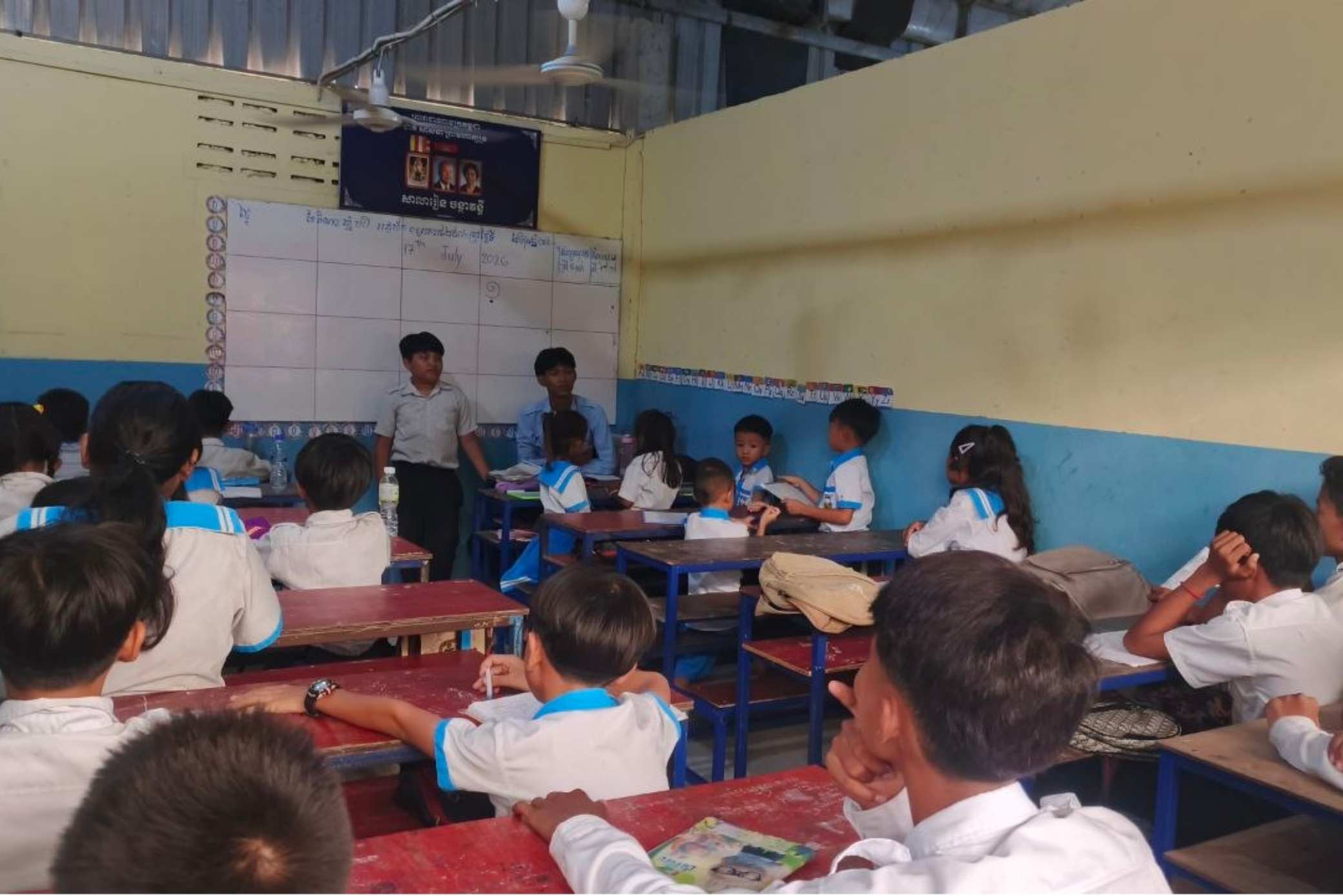
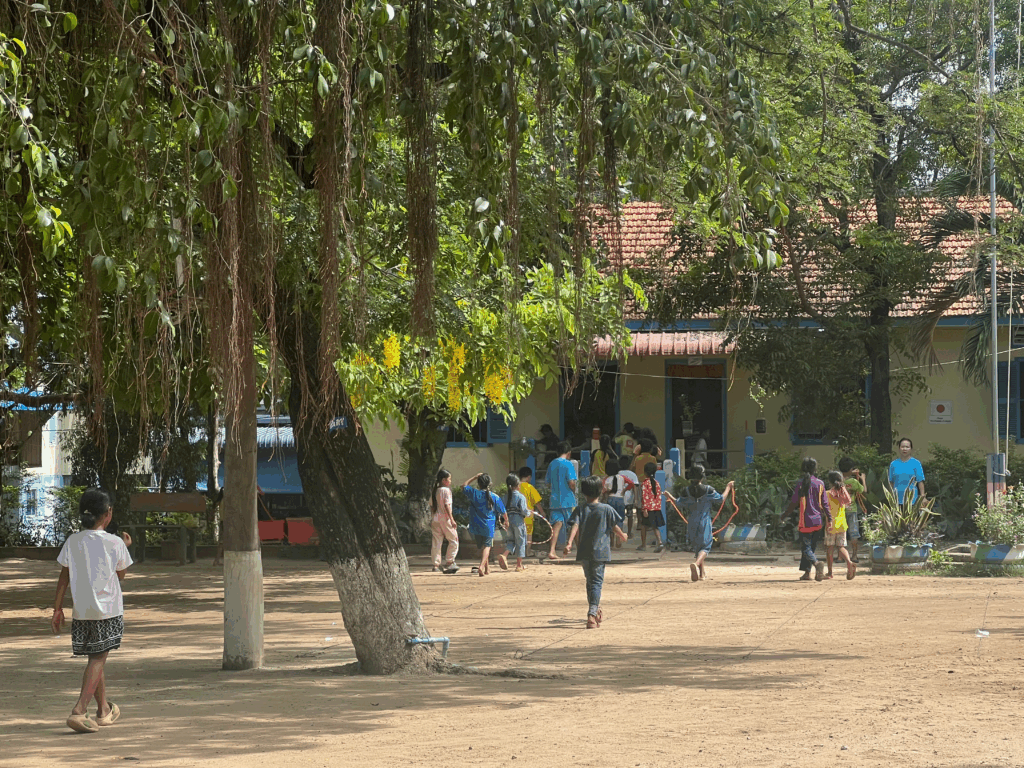
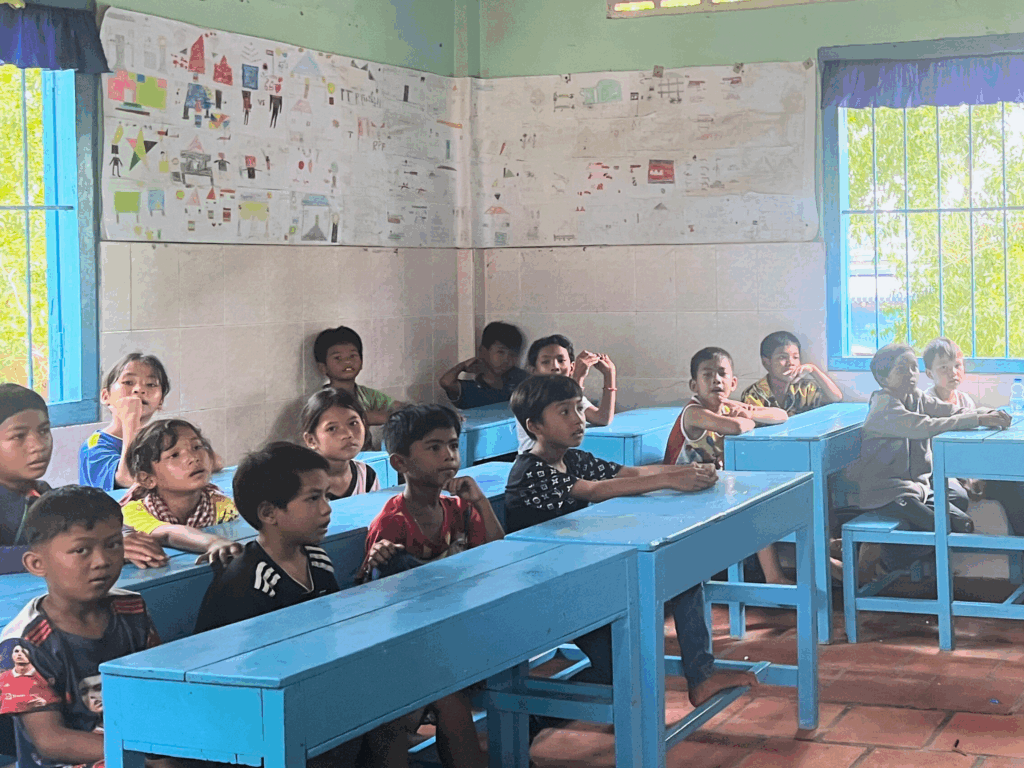
On the outskirt of Neak Loeung town, where narrow path between small homes and villagers’ green fields, takes to a small hill, a school that allows hope for children: Damnok Toek’s Non-Formal Education (NFE) Program. As the bell rings, students stream to the right toward their classrooms, Grade 1 children settle at low desks, while those in Grades 2 and 3 take their places at taller tables, arms clutching textbooks. Inside the class, children recite the alphabet in unison, their teachers guiding each syllable with gentle corrections. It’s a simple, daily ritual, yet transformative.
This Non-Formal Education (NFE) Program operated by Damnok Toek offers vulnerable children from the surrounding community, a chance to reclaim their right to education. Designed to bridge educational gaps and prepare students for reintegration into the public school system, this program is not just about learning. It’s about hope, empowerment, and building brighter futures.
This program aims to address the educational needs of children who have been dropped out of schooling due to poverty, disability, migration, or difficult family situations. Today, the NFE program in Neak Loeung serves many students across various grade levels. The school operates three classrooms, each dedicated to a different grade level from 1 to 3, providing students with a nurturing environment tailored to their needs and learning pace. Classes are smaller and more personalised, allowing children to learn at their own pace while receiving support from trained educators.
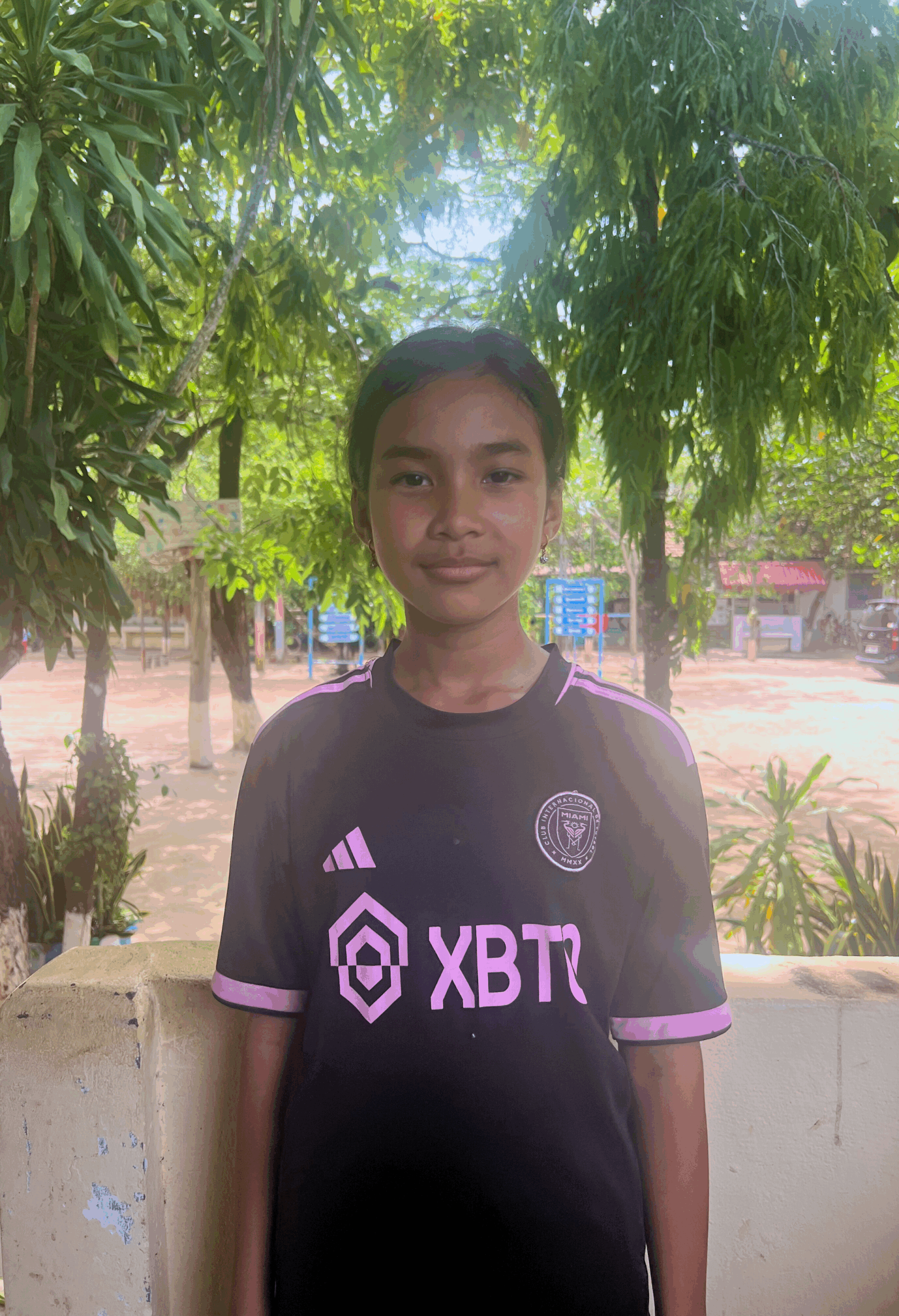
One such student is Sophea*, a 12-year-old who sits front and right near the window currently studying in Grade 3 of the NFE program. She is now the top student in her class, and her favourite subject is mathematics. Her parents were grateful when Damnok Toek offered support, including educational materials and uniforms.
She smiles and says: “I like studying here because the way teachers are teaching is good, and they make it easy for me to understand the lessons quickly.” She also recommends her cousins come to study here as well. She added that she wants to continue her studies to Grade 4, but if her parents are unable to support her, she will have to give up her studies to earn money to ease her family’s economic burden.
Ms. Chakriya, a teacher in the NFE program for over 20 years, has seen firsthand the changes the program brings. “Many of our students arrive with low confidence and little to no basic literacy. But with patience and encouragement, they become better,” she recalls.
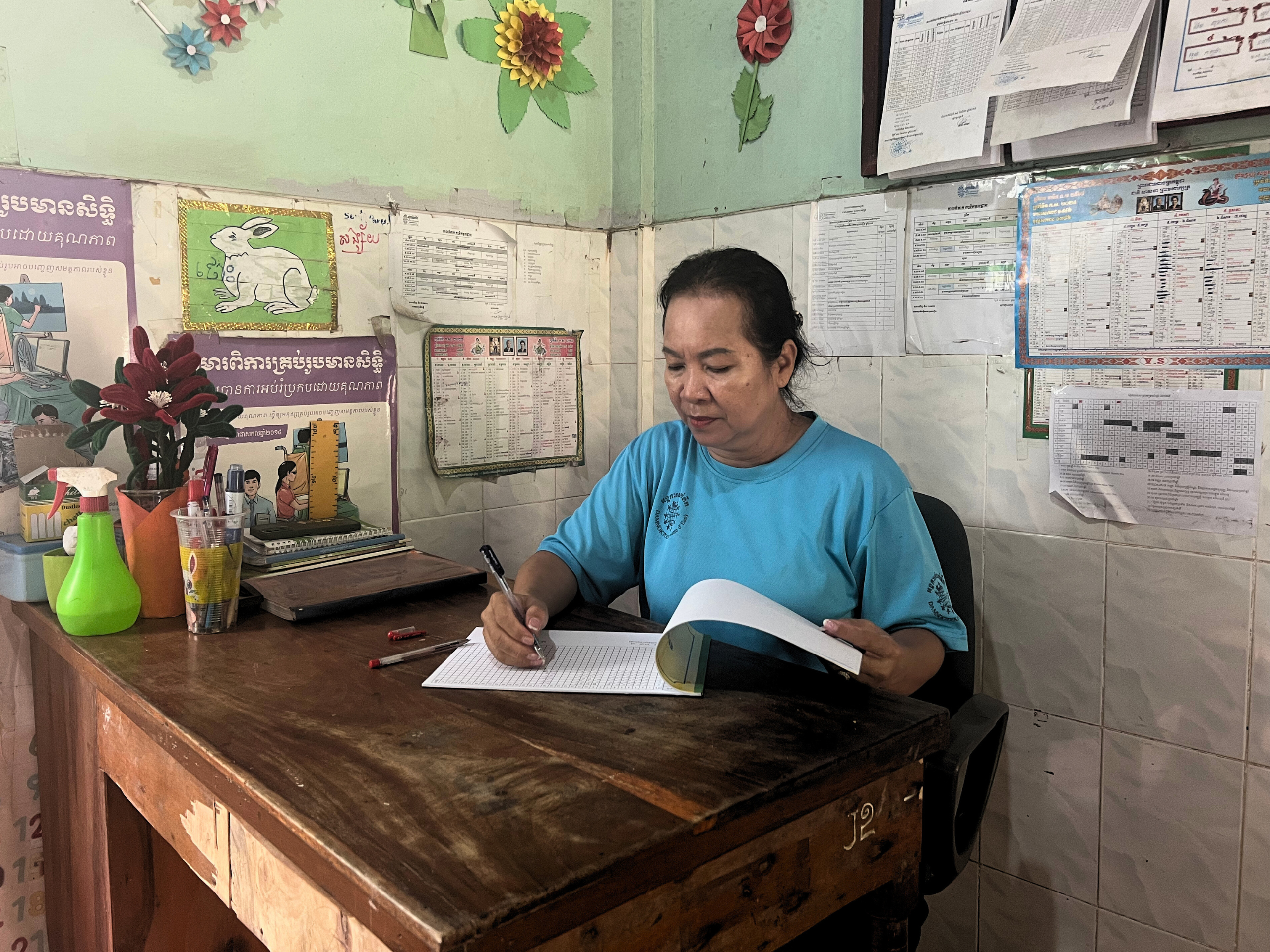
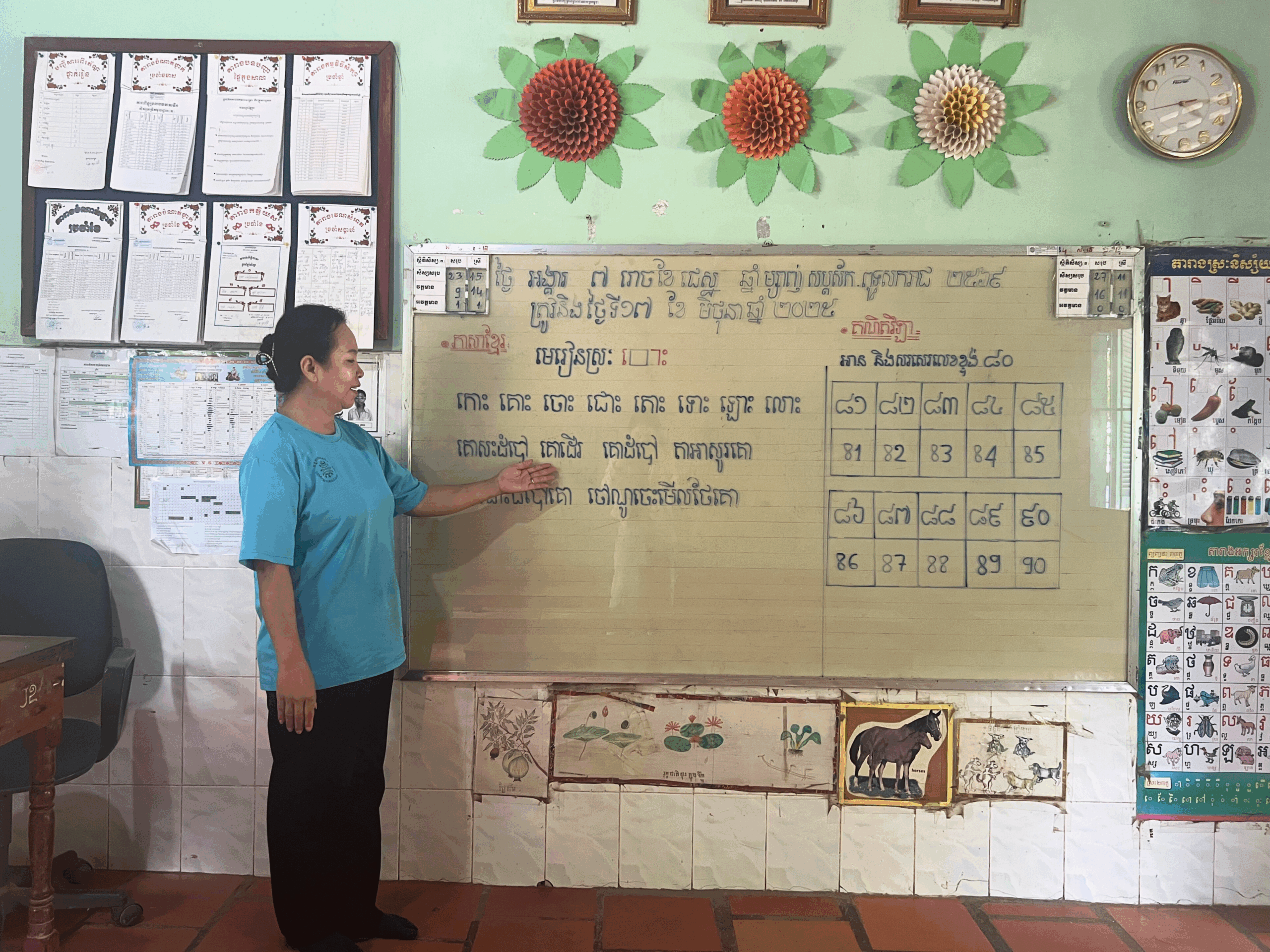
She hopes for more resources to help the NFE program grow. For instance, she wants to have more classes so that more children can study and become knowledgeable like Sophea, allowing them the opportunity to teach others and potentially integrate into public schools.
As of 2025, the NFE program in Neak Loeung has enrolled a total of 159 students, including 72 female students. This represents a slight decrease from last year, when enrolment was at 162 students, with 77 being female. However, looking at the completion rate of students, it remains a notable highlight, standing at 93.6%. In terms of integration into public schools, it largely depends on government policies and the students’ ability to pass the required exams. Those who successfully pass the exams are eligible to enrol in public schools.
The Non-Formal Education Program at Damnok Toek is more than a classroom. It is a sanctuary for healing, growth, and dreams. For students like Sophea and teachers like Ms. Chakriya, the program represents a powerful reminder that every child deserves a chance to learn, regardless of their background. Through compassion, commitment, and community support, Damnok Toek continues to transform the lives of vulnerable children, one lesson at a time.
*The name has been changed in order to protect her identity