In the wake of the ongoing border dispute, communities living along the frontier face heightened challenges that disproportionately affect vulnerable children and families. Following the border closure, Damnok Toek’s Futures Office in Poi Pet has become an essential lifeline, responding to an increased monthly demand for services. The monthly demand nearly doubled to an average of 53 people (June to September), compared to an average of 28 people per month from January to May.
Before the border dispute happened, many local people found employment in casinos or through cross-border jobs, working as cleaners, cooks, hospitality staff, or casino service workers. However, with casinos closing or cutting back due to fewer customers, these opportunities have been significantly reduced. Today, the most available jobs are in security, construction, factories, tailoring, cleaning, and small shops or restaurants. For families facing sudden unemployment, the Futures Office has become an essential resource to connect them with new opportunities and provide pathways toward stability.
Since the border closure, many migrant workers have returned from Thailand, flooding the local job market, while families who once depended on cross-border employment now turn to the Futures Office for help. As one Futures Office staff member explained, clients often come urgently in need of work, choosing job placement services over vocational training because they need immediate income to survive.
Applications now arrive not only from individuals but also through village chiefs, community referrals, and returning clients who encourage their peers and relatives to seek the Futures Office services. The Futures Office maintains a standby list of applicants, and if a job cannot be found within one to two weeks, cases are referred to the Provincial Department of Labor for additional support.
Among the young people who have found hope through the Futures Office is Narin*, an 18-year-old who returned from Thailand late July due to the ongoing border dispute. Through the Futures Office, she started receiving vocational training in August to become a hairdresser, along with essential rice support, as part of Damnok Toek’s emergency distribution program.
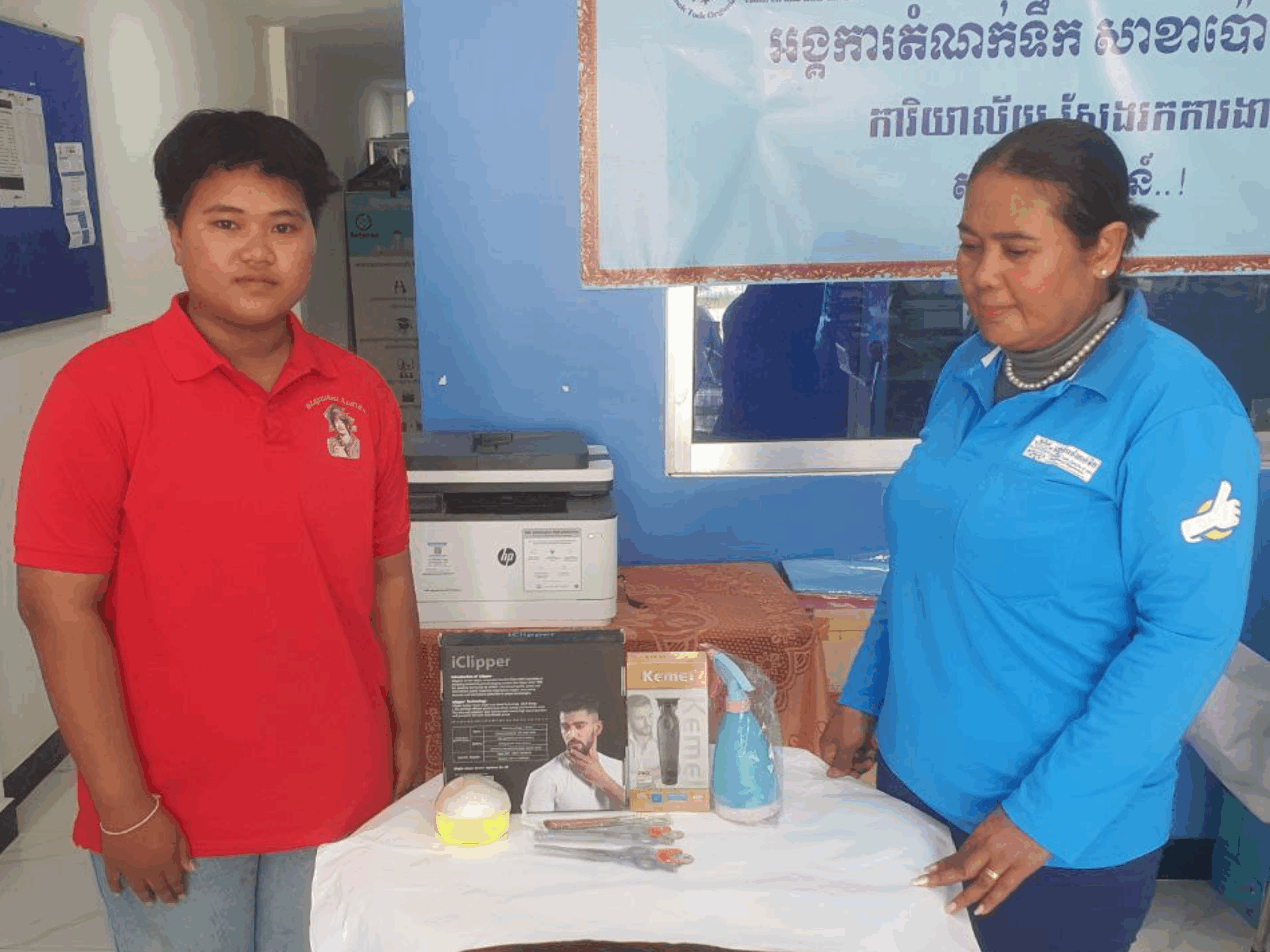
Narin receives materials for her vocational training from Damnok Toek.
“If no Futures Office, I think my situation will be worse and I might not have a skill that I like,” Narin explained. “Instead, I would have had to find any job just to survive. Now I have skills, and I dream to open my own hairdresser shop.”
Chenda*, 37-year-old, also returned from Thailand after the border dispute broke out and is now residing in Poi Pet with her husband and daughter. Her other child is living with Chenda’s mother in Battambang, who is currently studying in fifth grade. Chenda recently received help from the Futures Office to secure a job as a gardener in one of the local casino companies. In addition, the Futures Office was able to do job placement for Chenda’s husband and older daughter in the same casino.
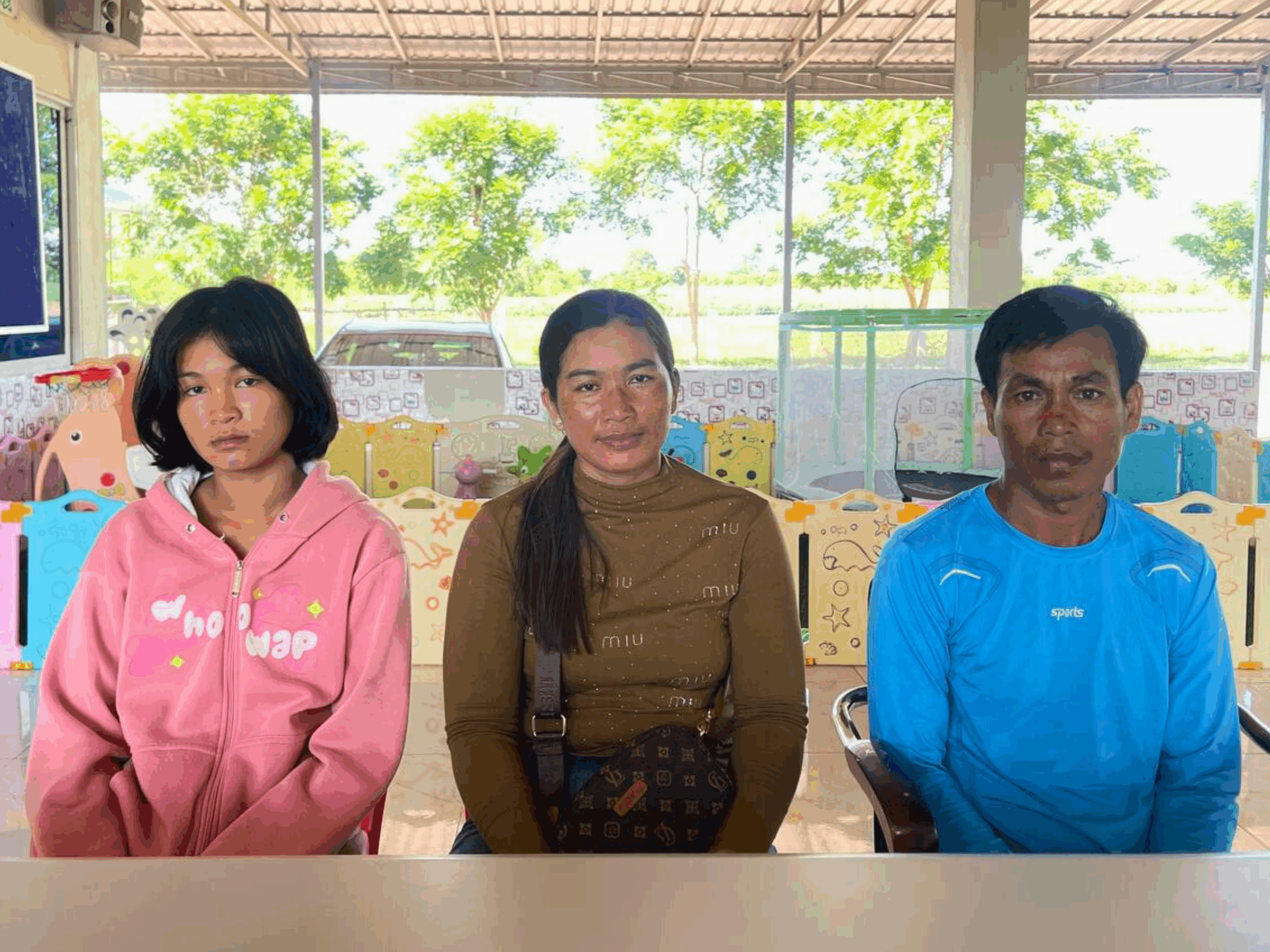
Right: Chenda’s daughter; Middle: Chenda; Right: Chenda’s Husband
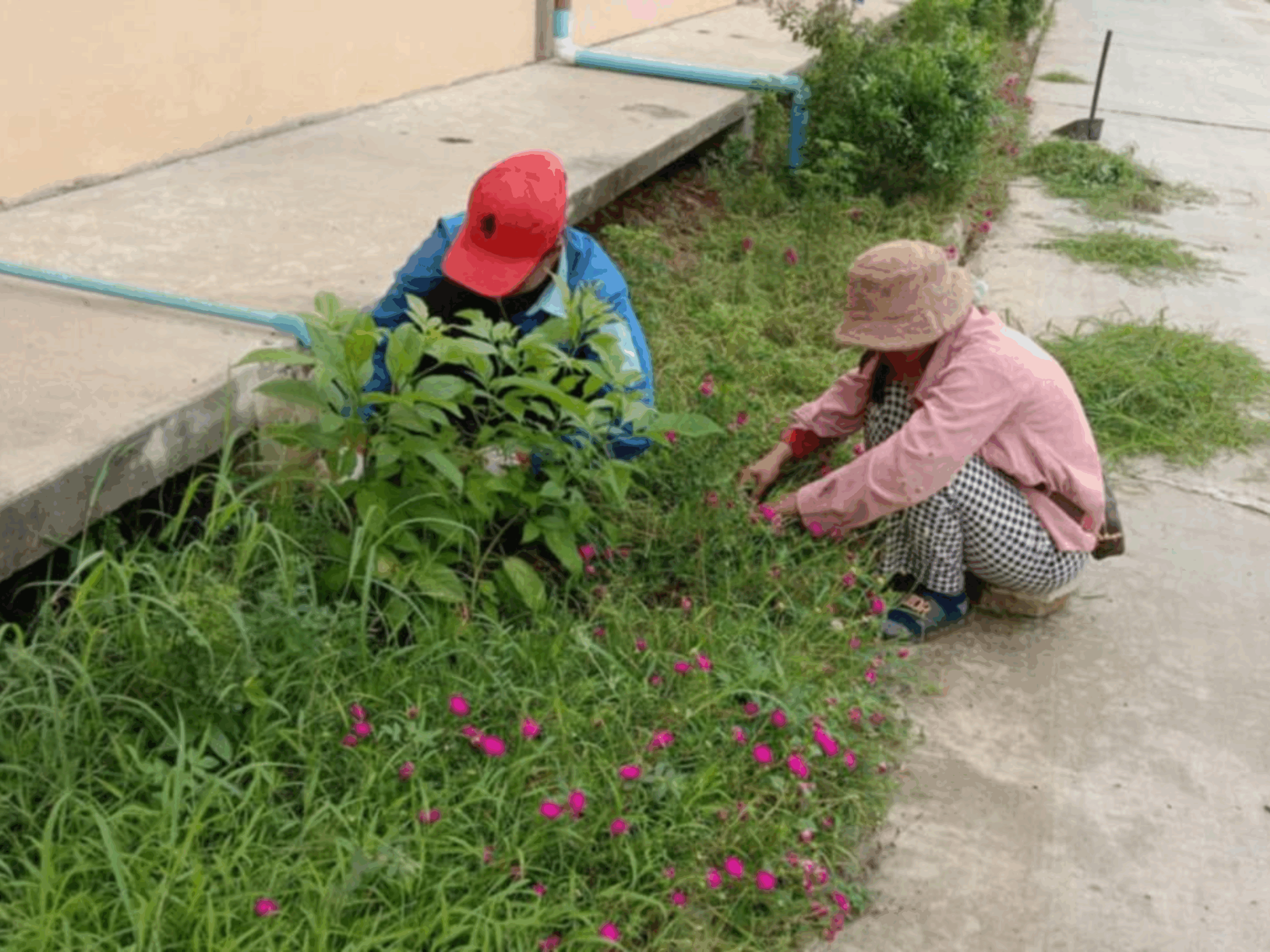
Chenda is gardening with her colleague.
“I like what I’m doing because the work is easy and my supervisor is kind to me and my family,” Chenda said. She continued to tell that Damnok Toek staff not only helped her prepare her CV and coached her for the interview but also offered her family five days’ worth of food and rice through the emergency distribution program. “The Futures Office is good and important because it really helps poor people to find jobs,” Chenda emphasised. Looking ahead, she hopes to have her own food cart to sell food on the street, building independence and stability for her family.
Beyond connecting clients to jobs, the Futures Office also equips them with essential soft skills. Through consultation meetings, clients receive guidance on CV preparation, interview practice, communication, adaptability, and confidence-building. Matching is a critical part of the process: the Futures Office aligns applicants’ skills with an employer’s needs. For example, security guard positions are given to those with prior experience or the endurance required for night shifts, ensuring higher success rates. When no immediate job fits are available, the Futures Office offers clients financial support for short-term training in sewing, enabling them to build new skills and get a job in a garment factory.
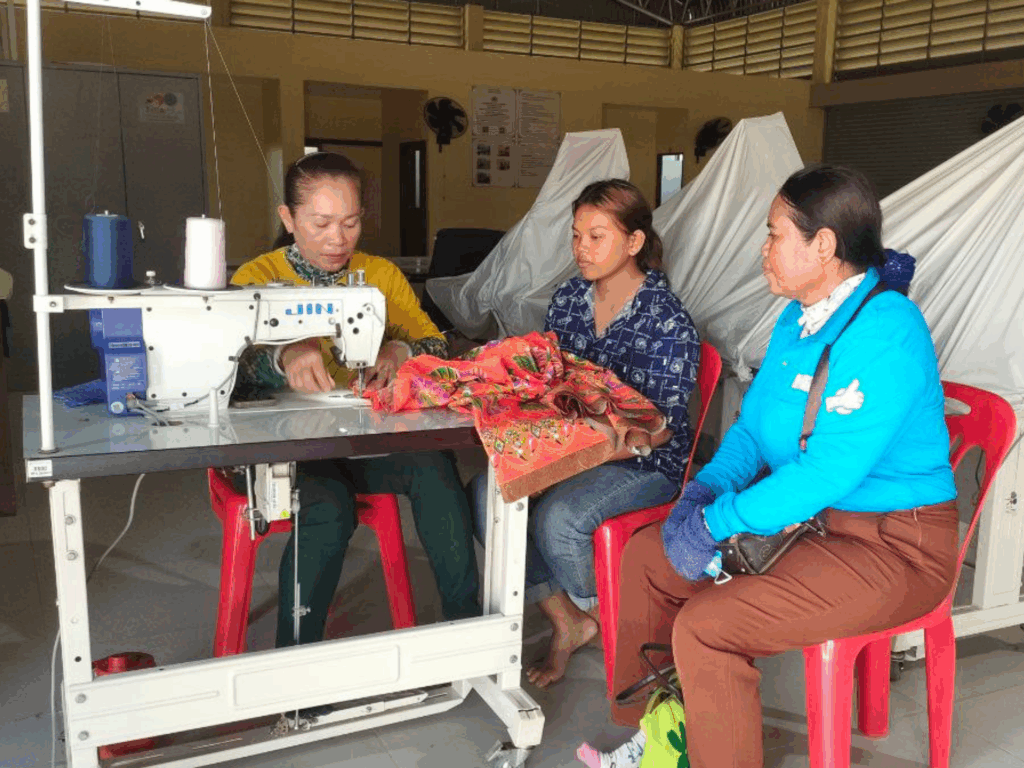
A client is getting short-term training in sewing with financial support from Damnok Toek.
Recognising that securing a job does not immediately solve financial struggles, the Futures Office also offers short-term social support. The social support service includes offering assistance with legal documentation, as well as short-term financial support for food, transportation and housing. For longer-term needs, the Futures Office identifies sustainable solutions, such as lending a bicycle for transportation until the client’s income stabilises. In this way, the Futures Office goes beyond job placement, offering safety nets that enable clients to stay employed and gradually regain independence.
Despite the economic challenges caused by the current border dispute, the Futures Office in Poi Pet continues to provide stability and opportunity for vulnerable people. Through employment counselling, vocational training, income generating activities, and job skills training and placement, the Futures Office is helping hundreds of people yearly not only to find immediate work but also build lasting resilience for the future.
*The names have been changed in order to protect their identity